
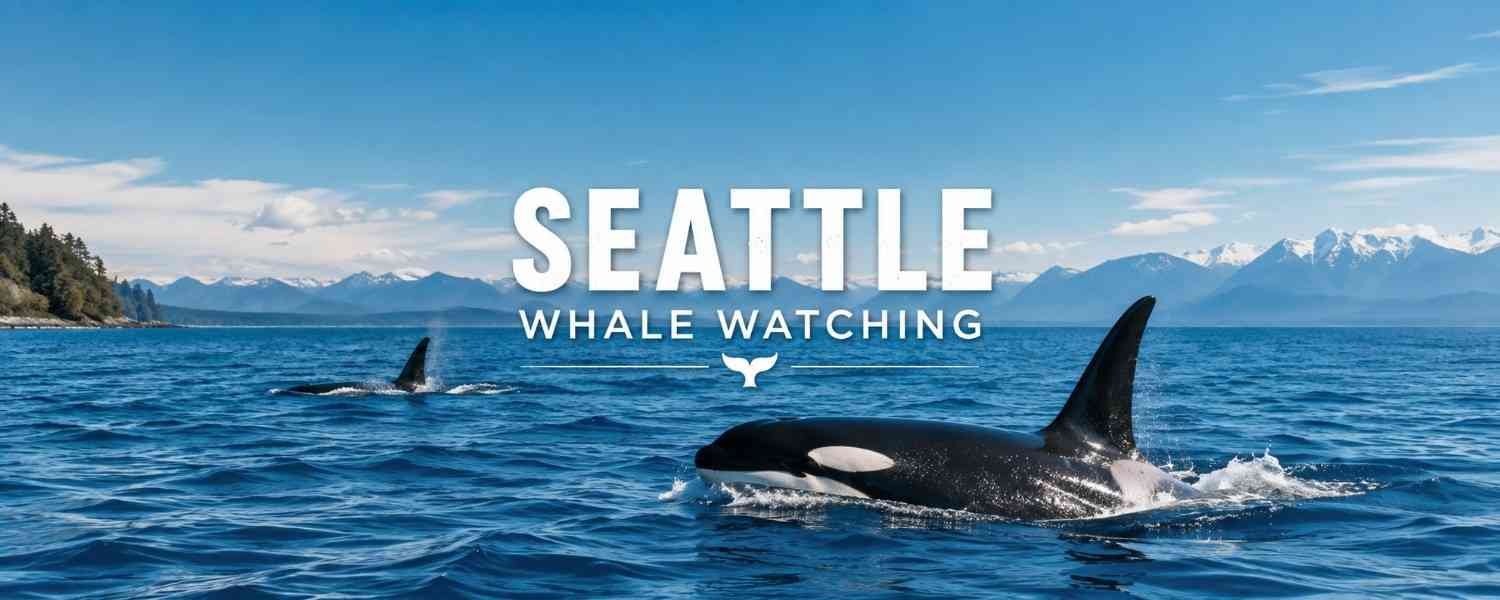
Best Places to Watch Whales in Seattle
Seattle is one of the best places in the Pacific Northwest for whale watching, with opportunities to see orcas, humpback whales, gray whales, porpoises, seals, and sea lions in the surrounding waters. You can watch whales from several Seattle beaches and parks, or take a guided boat tour into Puget Sound and the Salish Sea.
For a bigger wildlife experience, many visitors travel from Seattle to the San Juan Islands, where summer is especially popular for seeing orcas. Whales can be seen in the region throughout the year, but the best season depends on the species and location.
1. Why Seattle Is a Great Place for Whale Watching
Seattle sits beside Puget Sound, part of the larger Salish Sea, so visitors do not always need to travel far to look for marine wildlife. The city has more than 200 miles of shoreline, with beaches, waterfront parks, viewpoints, and boat operators offering access to the water.
The most famous animals are the orcas, but they are not the only whales you may see. Depending on the season and location, whale watching trips can also include humpback whales and gray whales. You may also see harbor seals, sea lions, porpoises, dolphins, bald eagles, and many types of seabirds.
The Southern Resident killer whales are especially important to the region. These endangered orcas are closely connected to the waters around Washington and depend heavily on salmon. Another group, known as Bigg’s or transient orcas, eats marine mammals such as seals and sea lions and can be seen in Puget Sound at different times of the year.
Whale Watching Tip:
Seeing a whale in the wild is never guaranteed. Even experienced captains cannot control where wild animals travel. Choose an operator with a good sighting policy and be prepared to enjoy the entire wildlife experience, not only the whales.
2. Best Time for Whale Watching in Seattle
Whale watching is possible throughout the year, but the experience changes with the seasons. June through September is generally a prime period for whale watching around Seattle and the San Juan Islands. Southern Resident orcas are commonly associated with the San Juan Islands during the warmer months, particularly when salmon are available.
Spring can be a particularly interesting time for gray and humpback whale sightings in the wider Seattle area. Gray whales are also known to feed around Whidbey Island during spring, while transient orcas can be encountered at different times of the year.
Summer is usually the easiest season for first-time visitors because there are many scheduled tours, longer daylight hours, and more opportunities to combine whale watching with other outdoor activities.
| Season | What you may see | Best for |
| March–May | Gray whales, humpbacks and other marine wildlife | Spring wildlife trips |
| June–September | Orcas, humpbacks, seals, sea lions and porpoises | Prime whale-watching season |
| October–November | Orcas and other marine mammals | Quieter fall trips |
| December–February | Transient orcas and other wildlife | Winter shore watching and wildlife spotting |
These are general seasonal patterns rather than guarantees. Wildlife movement depends on food, tides, weather, and ocean conditions.
3. Regulations and Guidelines Before You Go
Responsible whale watching is an important part of visiting Seattle and the San Juan Islands. Whales are protected by federal and state laws, and visitors should never try to get closer simply to take a better photograph.
For general marine mammal viewing, NOAA recommends staying at least 100 yards away. In Washington waters, additional rules apply to killer whales. Boaters must stay at least 200 yards from Bigg’s/transient killer whales, while Washington’s current rules require vessels to stay 1,000 yards from Southern Resident killer whales.
The 1,000-yard Southern Resident rule applies year-round under Washington law and includes motorized and non-motorized vessels, with limited legal exemptions. If a Southern Resident orca comes within 1,000 yards, vessels must move away while observing the applicable speed rules. If an orca comes within 400 yards, operators are required to disengage the transmission when it is safe to do so.
Another important rule is to avoid putting a boat between whales, especially mothers and calves. Do not chase whales, cut across their path, or approach directly from the front or behind. NOAA’s Be Whale Wise guidance recommends slowing down and giving animals plenty of room.
4. The San Juan Island No-Go Zone
There is also a voluntary no-go zone along the west side of San Juan Island, an area that is particularly important to Southern Resident orcas. WDFW encourages boaters to avoid these waters because they are historically important feeding and resting areas. The zone extends roughly a quarter-mile from shore in much of the area and farther around Lime Kiln Point.
For visitors, the easiest approach is simple: book a responsible tour and let an experienced captain handle the wildlife regulations.
5. Be Respectful From Shore
Wildlife protection rules do not mean that you need to stay away from whale-watching viewpoints. Shore-based viewing is one of the best ways to enjoy whales without putting pressure on them.
Use binoculars instead of trying to walk closer to the water. Never feed, touch, chase, or deliberately disturb wildlife. If an animal reacts to your presence, you are too close and should move away. The National Park Service also asks visitors to stay on designated trails and avoid trespassing on private property.
6. Whale Watching From Seattle
You do not have to leave Seattle to start your whale-watching adventure. Several locations around the city offer a chance to spot whales from shore, while guided tours leave from the downtown waterfront and nearby communities.
i. Alki Beach
Alki Beach in West Seattle is one of the most accessible places to try shore-based whale watching. It offers wide views across Puget Sound and is easy to reach from downtown by car or water taxi.
Alki can be especially interesting when marine mammals are active close to shore. Seals and their pups can attract transient orcas looking for food. Orcas may be more likely to appear around Alki during fall and winter, while transient whales can be seen throughout the year.
The biggest advantage of Alki is that you can combine whale watching with a relaxed Seattle day. Walk along the waterfront, enjoy views of downtown, have a meal nearby, and keep your binoculars ready.
For the best experience, choose a clear day and find a comfortable position with an open view of the water. Whale sightings are never guaranteed from shore, so think of this as a peaceful wildlife-viewing experience rather than a scheduled show.
ii. Golden Gardens Park
Golden Gardens Park in Ballard is another Seattle shoreline location where whales and other marine animals have been reported.
The park is a good choice for visitors who want a more natural setting. You can enjoy the beach, views of Puget Sound and surrounding landscapes while watching the water for a dorsal fin or whale spout.
Golden Gardens is particularly useful if you are staying in northern Seattle and do not want to travel across the city to West Seattle.
iii. Discovery Park
Discovery Park gives visitors a different type of Seattle whale-watching experience. It is one of the city’s major natural areas and has coastal viewpoints where you can look across Puget Sound.
Because the park is much larger than a simple waterfront viewpoint, it is worth giving yourself extra time. You can combine a walk with wildlife watching instead of visiting only for a few minutes.
Bring binoculars, comfortable shoes and warm layers, especially if you plan to stay near the water for a while.
iv. Lincoln Park
Lincoln Park in West Seattle is another place worth considering when you want to watch marine life without joining a boat trip. Its shoreline gives visitors views across Puget Sound and is included among places where whales and other wildlife may be spotted.
Lincoln Park works particularly well for travelers who want to combine a nature walk, waterfront views, and a relaxed afternoon.
v. Carkeek Park
Carkeek Park in north Seattle also provides access to the shoreline and Puget Sound views. This is not a place where you should expect whales to appear on schedule. Instead, it is best treated as an easy wildlife-viewing opportunity while exploring Seattle’s parks.
Best Shore-Based Choices: If your main goal is simply to try your luck from land, start with Alki Beach or Golden Gardens Park. If you want a longer nature outing, consider Discovery Park or Lincoln Park.
7. Whale Watching Tours From Seattle
A guided whale-watching tour is usually the better choice if seeing whales is one of the main goals of your Seattle trip. Experienced captains and naturalists monitor wildlife activity and understand the waters of Puget Sound.
i. FRS Clipper From Downtown Seattle
One of the most convenient options is FRS Clipper, which offers whale-watching trips from the downtown waterfront at Pier 69.
This is especially useful if you are staying downtown and do not want to rent a car or travel north before your tour. The trip takes you onto the Salish Sea in search of whales and other marine wildlife.
Their tours are wheelchair accessible, and if you do not see a whale, the company offers a return trip under its sighting policy.
ii. Puget Sound Express From Edmonds
Another popular option is Puget Sound Express, which operates from Edmonds, north of Seattle. Its boats have indoor seating and outdoor viewing areas, making them useful in the cool and changeable Pacific Northwest weather.
For 2026, half-day tours are available from April 1 through December 31, and longer tours with a San Juan Islands stop from May 1 through September 7.
The company also has a whale-sighting policy that provides a voucher for another trip if guests do not see whales. This can be valuable if whale watching is one of the most important parts of your trip.
8. Whale Watching From the San Juan Islands
For travelers who want the classic Pacific Northwest orca experience, the San Juan Islands deserve special attention. The islands sit in the Salish Sea northwest of Seattle and are surrounded by productive marine waters.
San Juan Island is particularly famous for whale watching. The island can be reached by Washington State Ferries from Anacortes or by air, including seaplane services.
i. Friday Harbor
Friday Harbor is the main visitor center and a convenient base for whale-watching trips on San Juan Island.
Several tour companies operate from the harbor, giving visitors choices between traditional sightseeing boats and smaller, more adventurous vessels.
San Juan Safaris, for example, operates from Friday Harbor with naturalist-led trips and vessels designed for wildlife viewing. Its larger vessel has indoor seating, a viewing deck and restroom facilities, while its smaller Zodiac-style boat provides a more open-water experience.
Friday Harbor is also a good place to build a complete day around whale watching. You can visit local shops, restaurants and The Whale Museum, then join a wildlife cruise or explore the island.
ii. Lime Kiln Point State Park
Lime Kiln Point State Park is one of the most famous shore-based whale-watching locations in the region. Washington State Parks describes it as one of the best whale-watching places on earth. It sits on the west side of San Juan Island and looks directly across important whale habitat.
The park is known for its historic lighthouse and rocky shoreline. Visitors can watch for orcas, gray whales, porpoises and other marine life from the shore. Washington State Parks says wildlife viewing at the park is particularly associated with spring through fall, with peak viewing influenced by salmon migration.
The park is open 8 a.m. to dusk year-round, although seasonal services and interpretive programs have different schedules. A Discover Pass is required for parking, with current Washington State Parks information listing a one-day pass and annual pass option.
The lighthouse, shoreline and wildlife viewing make Lime Kiln Point an excellent choice even if whales do not appear during your visit.
iii. San Juan County Park
San Juan County Park is another important west-side viewing location. The National Park Service’s land-based whale-watching guide explains that it can be useful when orcas are traveling north along the west side of San Juan Island. The park also has views toward Canadian waters and the surrounding coastline.
This is a good example of why whale watching from land requires patience. The best viewpoint can change depending on where whales are moving. A location that is excellent one afternoon may be quiet the next.
iv. Eagle Cove
Eagle Cove County Park is another possible shore-based viewing location. The National Park Service notes that killer whales often pass Eagle Cove during summer, making it an interesting place for land-based wildlife watching.
The beach and surrounding scenery also make it a pleasant place to spend time even when whales are not visible.
v. San Juan Island National Historical Park
San Juan Island National Historical Park provides another way to experience the island’s wildlife and landscapes. The National Park Service has created a Land-Based Whale Watching Tour with several viewing stops around the island.
This is particularly helpful for first-time visitors because you can use the NPS guidance to understand where public viewing areas are located.
However, visitors should remember that some waterfront areas are private property. Never cross private land to get a better whale view. The National Park Service also warns visitors not to stop on roads or park illegally during whale sightings.
9. Guided Whale Tours in the San Juan Islands
A guided trip is often the easiest way to understand the wildlife around the islands. Local naturalists can explain the difference between resident and transient orcas, identify other marine animals and help visitors understand why whales are important to the Salish Sea ecosystem.
i. San Juan Safaris operates whale and wildlife tours from Friday Harbor and focuses on respectful wildlife viewing. Its tours may include orcas, humpback whales, seals, sea lions and eagles.
ii. San Juan Excursions also offers whale-watching trips from Friday Harbor, while other operators serve Roche Harbor and other parts of the islands. San Juan Islands tours can include a wide range of marine wildlife rather than whales alone.
iii. For a more active experience, kayaking is another option. Companies such as Crystal Seas Kayaking offer guided kayak trips around the San Juan Islands. However, kayaking near marine mammals requires especially careful attention to wildlife regulations and distance requirements.
10. How to Get From Seattle to the San Juan Islands
There are several ways to reach the islands from Seattle.
The most common route for visitors with a car is to drive north to Anacortes and take a Washington State Ferry. Anacortes is about 90 miles north of Seattle, with ferry service to San Juan, Orcas, Lopez and Shaw islands.
For travelers who want to avoid a long drive, seaplane travel is another option. Kenmore Air operates flights from the Seattle area, while Friday Harbor Seaplanes offers service to San Juan Island. The seaplane journey can take roughly 45 to 50 minutes.
| Starting point | Option | Best for |
| Downtown Seattle | Half-day whale-watching cruise | Travelers with limited time |
| Seattle → Edmonds | Puget Sound Express | Dedicated whale-watching trips |
| Seattle → Anacortes → San Juan Island | Car + ferry | Full island experience |
| Seattle → San Juan Island | Seaplane | Speed and scenic views |
| Friday Harbor | Local whale-watching cruise | Best access to island-based tours |
| San Juan Island | Shore-based viewing | Travelers who prefer land viewing |
11. What to Bring for Whale Watching
- Warm layers: Boat rides can feel cold, even on sunny days.
- Waterproof jacket: Useful for wind and changing weather.
- Comfortable shoes: Choose shoes suitable for walking on boats or beaches.
- Sunglasses and sunscreen: Protect yourself from sun and water glare.
- Binoculars: Great for shore-based whale watching.
- Camera and snacks: Helpful for longer boat trips.
- Motion sickness preparation: If you get seasick, consider a larger boat with indoor seating.
- Enjoy the moment: Keep your camera ready, but watch the whales with your own eyes too.
12. How to Improve Your Chances of Seeing Whales
The most important factor is timing. Summer is generally a strong season for orca watching around the San Juan Islands, while spring can offer opportunities for gray and humpback whales in parts of the region.
Booking a guided trip also improves your chances because captains and naturalists follow current wildlife activity and understand local waters. Some operators also offer return-trip policies when whales are not seen.
Binoculars make a big difference, especially at places such as Lime Kiln Point, Alki Beach and Golden Gardens.
13. Whale Watching With Kids
Whale watching can be an excellent family activity because it combines wildlife, science and outdoor exploration. Children may enjoy seeing not only whales but also seals, sea lions, eagles, porpoises and seabirds.
For families, a larger boat with indoor seating, restrooms and easy viewing areas may be more comfortable than a small open vessel. The National Park Service also highlights land-based whale watching as a family-friendly activity on San Juan Island.
If children become bored waiting for whales, choose an itinerary that includes other attractions. Friday Harbor, The Whale Museum, beaches and island parks can make the day more enjoyable.
14. The Whale Museum in Friday Harbor
A visit to The Whale Museum can add meaning to a whale-watching trip. Located in Friday Harbor, the museum focuses on whales and the marine environment of the Salish Sea.
The museum was established in 1979 and combines public education with research. It is especially useful for visitors who want to learn more about the different whale populations before going out on the water.
Learning about the whales first can make the actual sighting more interesting. Instead of seeing only a black fin in the distance, you may begin to understand the animals, their families, diets and conservation challenges.
14. Seattle Whale Watching vs. San Juan Islands
Both options are worthwhile, but they suit different travelers.
Seattle whale watching is better if you have limited time. You can take a half-day cruise from downtown or try shore-based viewing at Alki Beach, Golden Gardens, Discovery Park or other waterfront locations.
The San Juan Islands are better if whale watching is one of the main purposes of your trip. You can combine a guided cruise with land-based viewing, visit Lime Kiln Point, explore Friday Harbor and learn about local whales at The Whale Museum.
For first-time visitors with only two or three days in Seattle, staying in the city and taking a dedicated tour may be the easiest option. If you have an extra day, the San Juan Islands can turn whale watching into a much larger Pacific Northwest adventure.
Seattle Whale Watching Experience Reviews
Frequently Asked Questions
1. Where is the best place to watch whales near Seattle?
For shore-based viewing inside Seattle, Alki Beach and Golden Gardens Park are two of the most popular choices. For a more dedicated whale-watching experience, consider a boat tour from Seattle or Edmonds.
2. What is the best place to see orcas?
The San Juan Islands, especially San Juan Island, are among the best-known places for seeing wild orcas in the Pacific Northwest. Lime Kiln Point State Park is one of the region’s most famous land-based viewing sites.
3. Can you see whales from Seattle without a boat?
Yes. Whales and other marine mammals can sometimes be seen from Alki Beach, Golden Gardens, Discovery Park, Lincoln Park and other shoreline areas. However, sightings are unpredictable, so a guided boat tour generally gives you a better dedicated wildlife-watching experience.
4. What months are best for whale watching in Seattle?
June through September is generally a prime period, especially for orca watching around the San Juan Islands. However, whales can be seen throughout the year, and spring can be good for gray and humpback whale activity.
5. Are whales guaranteed on Seattle whale-watching tours?
No tour can guarantee that wild whales will appear. Some operators provide a free return trip or voucher if you do not see whales, so check the individual company’s policy before booking.
6. How far away should you stay from whales?
General NOAA guidance is to stay at least 100 yards from whales, while Washington waters have stricter rules for killer whales. Boaters must stay 200 yards from Bigg’s/transient killer whales and 1,000 yards from Southern Resident killer whales under current Washington rules.
7. Can I use a drone while whale watching?
Drones should not be flown close to whales or other marine mammals. NOAA warns that drone noise and close approaches can disturb wildlife.
8. Is Lime Kiln Point State Park worth visiting without a whale sighting?
Yes. The park has a historic lighthouse, shoreline trails, interpretive displays, and views across the Salish Sea. It is worthwhile even when whales are not visible.
Final Thoughts
The best places to watch whales in Seattle include Alki Beach, Golden Gardens Park, Discovery Park, and Lincoln Park, while guided tours from Seattle or Edmonds offer a better chance of seeing wildlife. If you have more time, visit the San Juan Islands, especially Friday Harbor and Lime Kiln Point State Park. Wherever you go, follow whale-watching regulations, keep a safe distance, and respect the animals for a memorable Seattle whale-watching experience.