
Seattle Space Needle: Complete Guide to the Iconic Seattle Landmark
Seattle has many beautiful places, but few are as easy to recognize as the Space Needle. Standing high above Seattle Center, this famous tower gives visitors a chance to see the city, mountains, water, and skyline from a completely different view.
But there is much more to do around it than just going to the top. The Space Needle is surrounded by Seattle Center attractions, museums, gardens, entertainment, parks, restaurants, public art, and family activities.
The nearby Queen Anne area also adds beautiful viewpoints, local streets, cafés, and a quieter neighborhood atmosphere. If you plan your day well, you can enjoy several Seattle experiences in the same area.
1. The Space Needle
The Seattle Space Needle is a 605-foot landmark that opened on April 21, 1962, as part of the Seattle World’s Fair. It was designed as a symbol of the Space Age and quickly became one of the most recognizable structures in the city. The tower was built in about 400 days and was designed to handle strong winds and earthquakes.
Today, the Space Needle is more than an observation tower. Its modern visitor experience includes large glass walls, open-air viewing areas, Skyriser glass benches, and The Loupe revolving glass floor. The observation experience was greatly changed during the Century Project renovation, which was completed in 2018.
The top of the Space Needle is called the Atmos. From the observation levels, visitors can look across downtown Seattle, Elliott Bay, Puget Sound, and the surrounding mountains. On a clear day, Mount Rainier can also be visible in the distance.
Space Needle Quick Info:
Address: 400 Broad St, Seattle, WA 98109
Height: 605 feet
Opened: 1962
Main experience: 360-degree city and mountain views
Special feature: The Loupe revolving glass floor
2. What You Can See From the Space Needle
The main reason people visit the Space Needle is the view. From the observation levels, the city looks completely different. Downtown Seattle appears below you, while the surrounding water and mountains create a much wider view.
You can look toward Puget Sound, Elliott Bay, downtown buildings, Queen Anne, Lake Union, and the mountains around the Seattle region. The exact view depends on weather and visibility. Seattle can be cloudy, so a clear day can make a big difference.
The outdoor observation area is especially interesting because it gives you an open feeling rather than placing you completely behind normal windows. The glass walls and Skyriser benches allow visitors to take photographs with fewer visual barriers.
For many people, sunset is one of the most attractive times to visit. The sky can change color while the city lights begin to appear. However, sunset periods can also be popular, so booking a timed entry in advance is useful.
3. The Loupe Revolving Glass Floor
The Loupe is one of the most unusual parts of the Space Needle. It is a revolving glass floor about 500 feet above the ground. The floor slowly rotates, giving visitors changing views of the city and the structure of the tower.
If you are comfortable with heights, this can be a fun part of the visit. You can stand or sit on the glass and look down toward the streets below. Some visitors love this feature, while people who do not enjoy heights may prefer the normal viewing areas.
The glass floor also lets visitors see the Space Needle’s structure from an angle that was not possible before the renovation. It is not simply a glass floor for photographs; it is part of the modern design of the tower.
4. Skyriser Glass Benches
Another popular feature is the Skyriser glass benches on the outdoor observation level. These benches are designed near the glass walls and create the feeling that you are leaning out over Seattle.
They have become popular photo spots because the city appears directly behind and below you. The design is especially interesting for travelers who want photographs that show both the person and the Seattle skyline.
5. Space Needle at Night
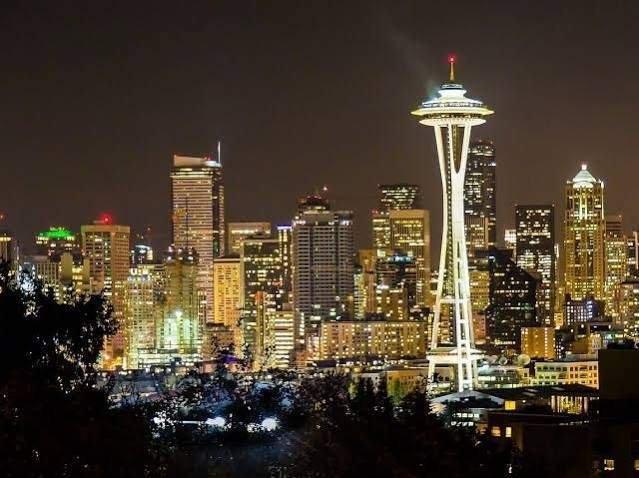
The Space Needle is also worth seeing after dark. During the day, the attraction is mainly about mountains, water, and city views. At night, the experience changes because Seattle’s buildings and streets become a field of lights.
The view can be especially attractive when the weather is clear. You can see the downtown skyline glowing below while the surrounding area becomes darker.
If you want both day and night views, check the available timed-entry options and plan enough time around sunset.
6. How Long Do You Need at the Space Needle?
A normal visit can take around one to two hours, depending on crowds, photographs, weather, and how long you spend on the observation levels.
You do not have to rush after reaching the top. Visitors can spend time looking at the city, taking photographs, walking between viewing areas, enjoying the glass features, and learning about the history of the building.
7. Space Needle Tickets and Planning
Space Needle ticket prices change according to date, time, and ticket type. Current official pricing lists general admission in a range of $35 to $55, while combination tickets are available for some nearby attractions.
The Space Needle also offers combination options with Chihuly Garden and Glass and IMAX, which can be useful if you plan to visit several attractions at Seattle Center.
Tip: If the weather is important to you, check the forecast before choosing your time. A clear day can make the mountain views much more rewarding.
8. How to Get to the Space Needle
Getting to the Space Needle is relatively simple because it is in Seattle Center, one of Seattle’s major visitor areas.
The Seattle Center Monorail is one of the easiest options from downtown. It connects Westlake Center with Seattle Center and arrives next to the Space Needle and other major attractions.
The monorail ride between Westlake and Seattle Center takes only about two minutes. This makes it convenient if you are staying downtown or visiting Pike Place Market and want to continue to the Space Needle.
Several bus routes also serve Seattle Center. If you are driving, Seattle Center has parking garages, including the 5th Avenue N Garage and Mercer Street Garage. Parking rates can change depending on demand and events.
Easy Transport Tip:
If you are staying in downtown Seattle, consider taking the Monorail to Seattle Center rather than driving. You can then walk between the Space Needle, Chihuly Garden and Glass, MoPOP, Pacific Science Center, and other attractions.
9. Attractions Right Around the Space Needle
The biggest advantage of visiting the Space Needle is its location. You do not have to travel across Seattle after going to the top. Many major attractions are within Seattle Center or only a short walk away.
i. Chihuly Garden and Glass
Chihuly Garden and Glass is one of the closest attractions to the Space Needle. It is located at 305 Harrison Street, right next to the tower.
The Glasshouse is one of the most memorable parts. It contains a huge suspended glass sculpture that becomes especially striking when viewed with the surrounding light.
The Garden combines glass artwork with plants, trees, and flowers. This makes it different from a traditional indoor art museum.
If you enjoy photography, colorful artwork, design, or unusual museums, this is an easy attraction to add to your Space Needle visit.
ii. Museum of Pop Culture
The Museum of Pop Culture, commonly called MoPOP, is another major attraction at Seattle Center.
Its collections and exhibitions explore popular culture through subjects such as music, science fiction, film, television, games, and famous creative figures.
The building itself is also one of the most unusual structures in Seattle. Its curved metallic exterior makes it easy to recognize from the Space Needle area.
iii. Pacific Science Center
The Pacific Science Center is a good choice for families and anyone who enjoys science.
The center includes interactive exhibits, science experiences, a planetarium, and changing exhibitions. Its current programming can change throughout the year, so visitors should check the schedule before going.
The Pacific Science Center is also very close to the Space Needle, making it easy to combine the two.
iv. International Fountain
The International Fountain is one of the free things to enjoy at Seattle Center.
It was created for the 1962 World’s Fair and remains an important part of the Seattle Center grounds. Water jets rise from the large fountain while people gather around the open space.
It is especially popular with families during warmer weather because children can enjoy the interactive water area.
You do not need a ticket for the fountain, so it is an easy stop between paid attractions.
v. Artists at Play
Artists at Play is another free attraction at Seattle Center. It is an artistic playground located between MoPOP and the Seattle Center Armory.
It includes climbing structures, play equipment, sound-based features, and areas designed for children to explore.
Families visiting the Space Needle with children can use this as a relaxing break between museums.
vi. Seattle Center Armory
The Seattle Center Armory is a convenient place to stop for food and drinks while exploring the area.
It is centrally located within Seattle Center and has dining options inside. Instead of leaving Seattle Center every time you need food, you can use the Armory as a simple break during your sightseeing day.
vii. Climate Pledge Arena
Climate Pledge Arena is also part of the Seattle Center area. It hosts major sports events, concerts, and other entertainment.
If there is an event on the day you visit the Space Needle, the area can become much busier than usual. This is worth remembering when planning parking, transportation, or dinner.
Even if you are not attending an event, the arena is an important part of the modern Seattle Center landscape.
viii. Seattle Center Public Art
Seattle Center is not only about museums and large attractions. It also has a wide collection of public art.
Visitors can find sculptures, installations, gardens, fountains, and other artworks across the campus. A self-guided art tour can be a nice option if you want something free to do between attractions.
10. Queen Anne and the Space Needle
The Space Needle is closely associated with the Queen Anne area, especially the Lower Queen Anne or Uptown part of the neighborhood.
Instead of staying only around the major attractions, walk through the surrounding streets and experience a more residential side of Seattle.
i. Kerry Park
Kerry Park is one of the most famous viewpoints in the Queen Anne area.
From the park, visitors can see downtown Seattle with the Space Needle standing prominently in the skyline. On clear days, Mount Rainier may also appear in the background.
This makes Kerry Park different from the Space Needle itself. At the Space Needle, you look outward over the city. At Kerry Park, you can photograph the Space Needle as part of the Seattle skyline.
The park is small, so you do not need a long visit. It works particularly well around sunset when the city begins to light up.
ii. Ward Springs Park
Ward Springs Park is another Queen Anne-area option. It has a view toward the Space Needle and downtown and also includes a renovated play area.
It can be useful for families who want a quieter outdoor stop after visiting the busy Seattle Center attractions.
iii. Bhy Kracke Park
Bhy Kracke Park is a small Queen Anne hillside park with views toward downtown, Lake Union, and Capitol Hill.
It is less about a major tourist attraction and more about seeing how Seattle’s hills and neighborhoods fit together.
Because Queen Anne has steep streets, comfortable shoes are useful if you plan to walk around the neighborhood.
11. Where to Eat Near the Space Needle
Food is easy to find around Seattle Center, particularly in and around the Armory. You can also walk toward Uptown and Queen Anne for additional cafés, restaurants, coffee shops, and casual dining.
If you want to stay close to the attractions, the Armory is convenient. If you want a neighborhood experience, explore Queen Anne streets after leaving Seattle Center.
Another option is to take the Monorail downtown and continue toward Pike Place Market, where you will find a much larger selection of restaurants and food stalls.
12. Attractions in Downtown Seattle Near the Space Needle
Some attractions are not immediately beside the Space Needle but are easy to combine with it during a full Seattle sightseeing day.
i. Pike Place Market is one of the most famous places in downtown Seattle. The market is not next door to the Space Needle, but the Monorail makes the connection simple. You can visit Pike Place Market, walk around downtown, and then take the Monorail to Seattle Center.
ii. Seattle Aquarium and the waterfront are also better treated as downtown attractions rather than Space Needle attractions. They can be combined with a Space Needle visit if you have a full day.
iii. FRS Clipper Whale Watching departs from Pier 69 on the Seattle waterfront at 2701 Alaskan Way. This is not beside the Space Needle, but it can be added to a larger Seattle itinerary.
iv. Biophilia Museums and Exhibits of Art, Nature and Science
Its Seattle location is at 900 Alaskan Way, on the waterfront. Its work connects art, nature, science, and biodiversity.
One of its projects has featured the Christopher Marley Exquisite Creatures exhibition, which uses preserved natural specimens and artistic presentation to encourage interest in biodiversity.
v. Cognition Escapes
For something completely different, Cognition Escapes offers escape-room experiences in downtown Seattle.
The current location is 503 Lenora Street, in the downtown area. The attraction features themed escape rooms where groups solve clues and puzzles to complete a challenge.
It is not directly beside the Space Needle, but it is close enough to include in a downtown Seattle itinerary.
Space Needle Area Attraction Guide
| Attraction | Area | Best for | Close to Space Needle? |
| Space Needle | Seattle Center | Views and photography | Yes |
| Chihuly Garden and Glass | Seattle Center | Art and glass | Yes |
| MoPOP | Seattle Center | Music and pop culture | Yes |
| Pacific Science Center | Seattle Center | Science and families | Yes |
| International Fountain | Seattle Center | Free outdoor activity | Yes |
| Artists at Play | Seattle Center | Children and families | Yes |
| Climate Pledge Arena | Seattle Center | Sports and concerts | Yes |
| Seattle Center Armory | Seattle Center | Food and breaks | Yes |
| Kerry Park | Queen Anne | Skyline photography | Nearby |
| Cognition Escapes | Downtown | Escape rooms | Short trip |
13. Best Things to Do Near the Space Needle
If you only have a few hours, stay around Seattle Center. Start with the Space Needle, then walk to Chihuly Garden and Glass and MoPOP. Add the Pacific Science Center if you enjoy science or are traveling with children.
If you have a full day, you can add the International Fountain, Artists at Play, Seattle Center Armory, Climate Pledge Arena area, and Queen Anne.
If photography is important, consider visiting Kerry Park later in the day for a different view of the Space Needle.
For evening entertainment, South Lake Union and downtown offer options such as Flight Club, Great Big Game Show, Cognition Escapes, and GameWorks.
14. Best Time to Visit the Space Needle
The best time depends on what you want to see.
For clearer mountain views, daytime can be useful because you can see the landscape more easily. For photographs, late afternoon and sunset can be attractive because the city changes from daylight to evening lights.
Early visits can also help you avoid some of the busier periods.
Weather is important. Clouds can hide Mount Rainier and the distant mountains. However, even on a cloudy day, the Space Needle still gives you a high view over Seattle.
- Important Things to Know Before Visiting
- Check the official opening hours before leaving because hours can change for special events, maintenance, or private activities.
- Book a timed ticket if you already know when you want to visit.
- Check the weather if your main reason for visiting is the mountain view.
- Wear comfortable shoes because Seattle Center and Queen Anne are walking-friendly, but Queen Anne itself has steep streets.
- If you are visiting several attractions, look at combination-ticket options before purchasing separate tickets.
What Visitors Say About the Space Needle
“Feeling the breeze while looking out over the city, Mount Rainier, Elliott Bay, and the surrounding mountains really puts into perspective how high up you are.”
— Matt, Tripadvisor reviewer, August 5, 2026
“We had great views of the Seattle area, and if it’s not cloudy, then you’ll likely get a good view of Mt. Rainier.”
— lithlith, Tripadvisor reviewer, July 17, 2026
“The views were amazing from both observation floors. We enjoyed the glass floor deck as well as the rotation of the floor.”
— hmillard5, Tripadvisor reviewer, July 8, 2026
“The 360-degree views are just breathtaking.”
— Helen C, Tripadvisor reviewer, August 6, 2026
“The daytime visit was brilliant, and we could see for miles. The glass benches and the rotating glass floor were quite an experience for both of us.”
— Jenny, Tripadvisor reviewer, August 8, 2026
FAQs
1. Is the Space Needle worth visiting in Seattle?
The Space Needle offers something that is difficult to experience from street level: a 360-degree view from high above Seattle. Its modern observation levels, glass features, and The Loupe revolving glass floor make the visit different from simply photographing the tower from outside.
2. How tall is the Seattle Space Needle?
The Space Needle is 605 feet tall. Its main observation experience is around the 500- to 520-foot levels, while the top of the structure reaches 605 feet.
3. What is special about the Space Needle?
The Space Needle is famous for its unusual Space Age design, its history connected to the 1962 World’s Fair, its panoramic views, its open-air observation experience, Skyriser glass benches, and The Loupe revolving glass floor.
4. How long should I spend at the Space Needle?
Most visitors can plan around one to two hours, depending on how busy it is and how much time they spend taking photographs and enjoying the views.
5. Can I see Mount Rainier from the Space Needle?
Yes, Mount Rainier can be visible on clear days. Visibility depends heavily on weather and cloud conditions, so there is no guarantee that the mountain will be visible during every visit.
6. What attractions are closest to the Space Needle?
The closest major attractions include Chihuly Garden and Glass, MoPOP, Pacific Science Center, International Fountain, Artists at Play, Climate Pledge Arena, and Seattle Center Armory.
7. Is Kerry Park close to the Space Needle?
Kerry Park is in the nearby Queen Anne area. It is not directly beside the Space Needle, but it is one of the popular places to see and photograph the Space Needle as part of the Seattle skyline.
8. Where can I go after visiting the Space Needle?
For a short visit, walk to Chihuly Garden and Glass, MoPOP, or Pacific Science Center. For a neighborhood experience, explore Queen Anne and visit Kerry Park. For downtown entertainment, consider Cognition Escapes, GameWorks, Flight Club, or Great Big Game Show.
Conclusion
The Seattle Space Needle is more than a famous landmark, offering history, modern design, photography, and beautiful city views. Its location makes it easy to explore nearby Seattle Center attractions such as Chihuly Garden and Glass, MoPOP, Pacific Science Center, and the International Fountain, while Queen Anne and Kerry Park add charming neighborhood streets and skyline views.
By planning attractions according to their locations, you can make the Space Needle the perfect starting point for a memorable Seattle experience.